

Better Atlanta Transit is a coalition of transit advocates, urban planners, business owners and community activists who support equitable and sustainable transportation for all Atlantans.

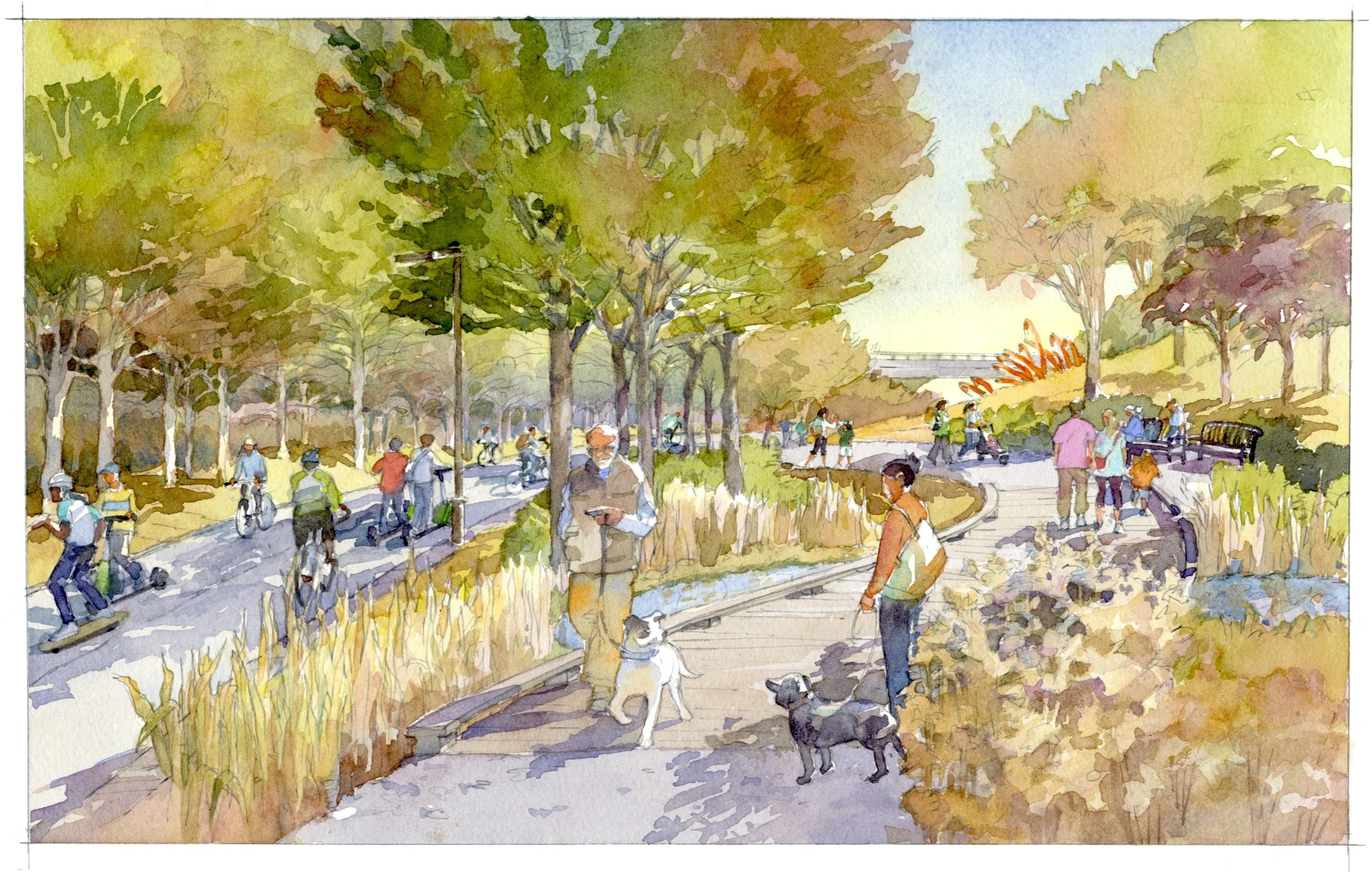







Life on the Beltline


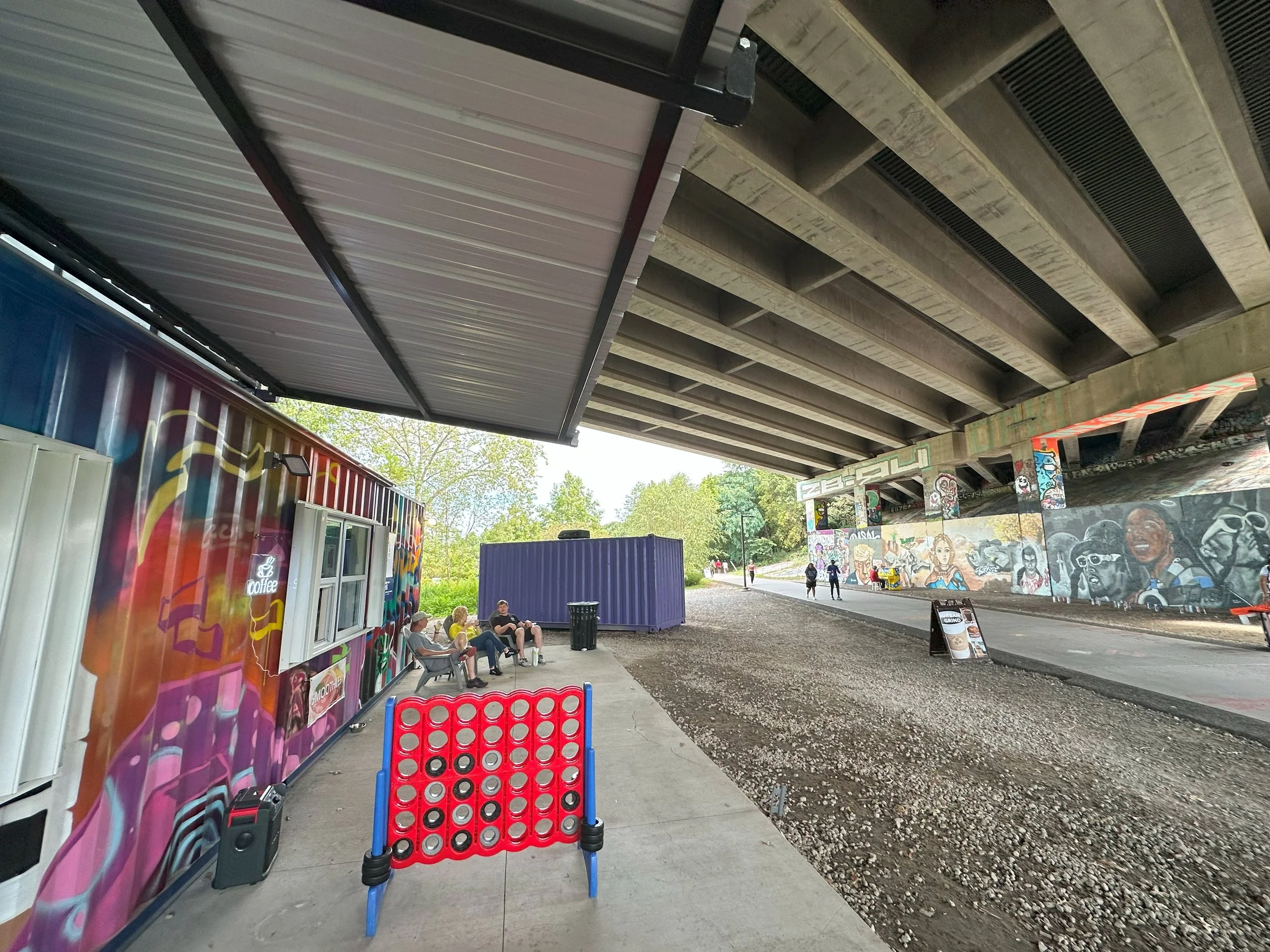





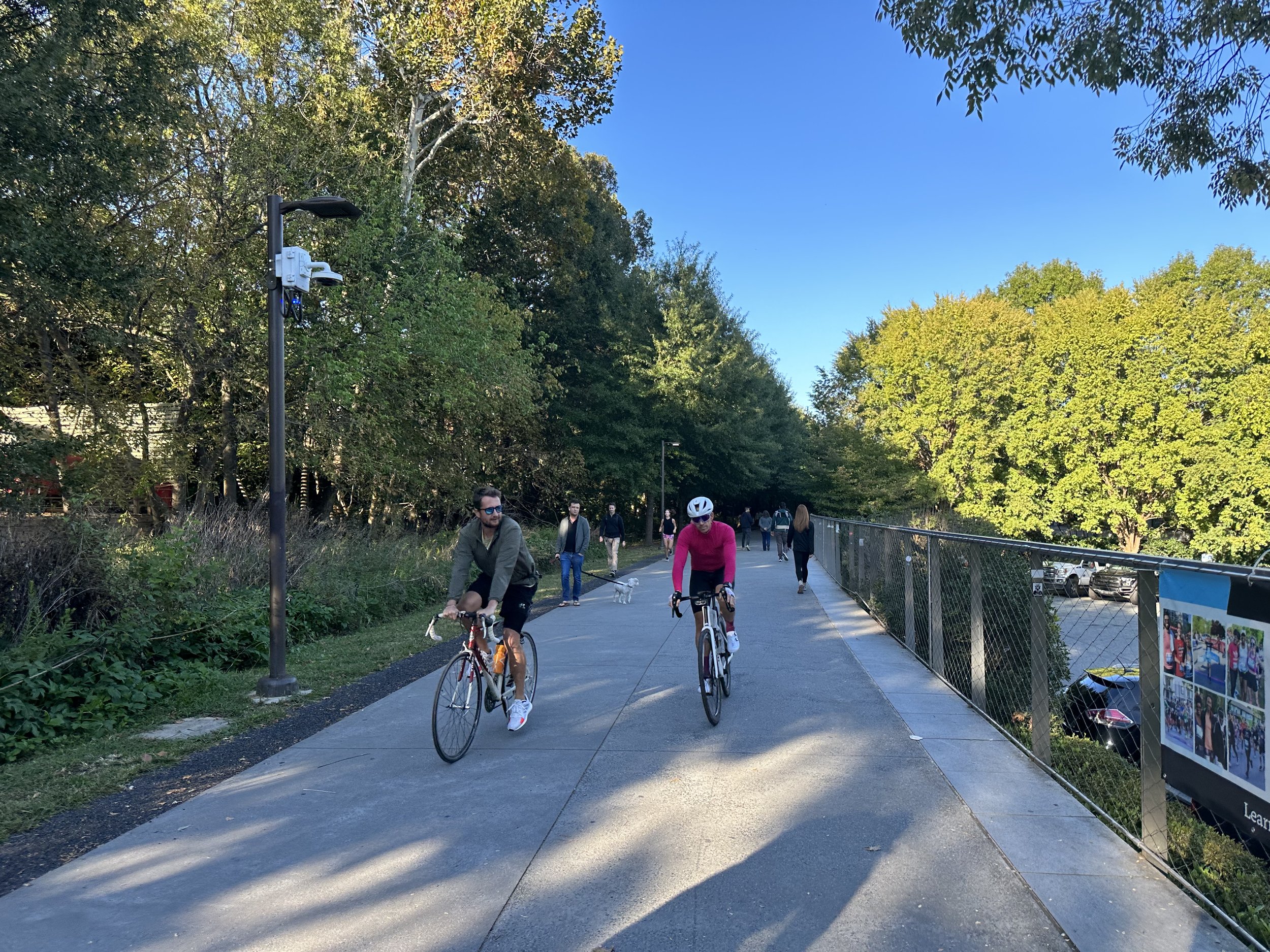

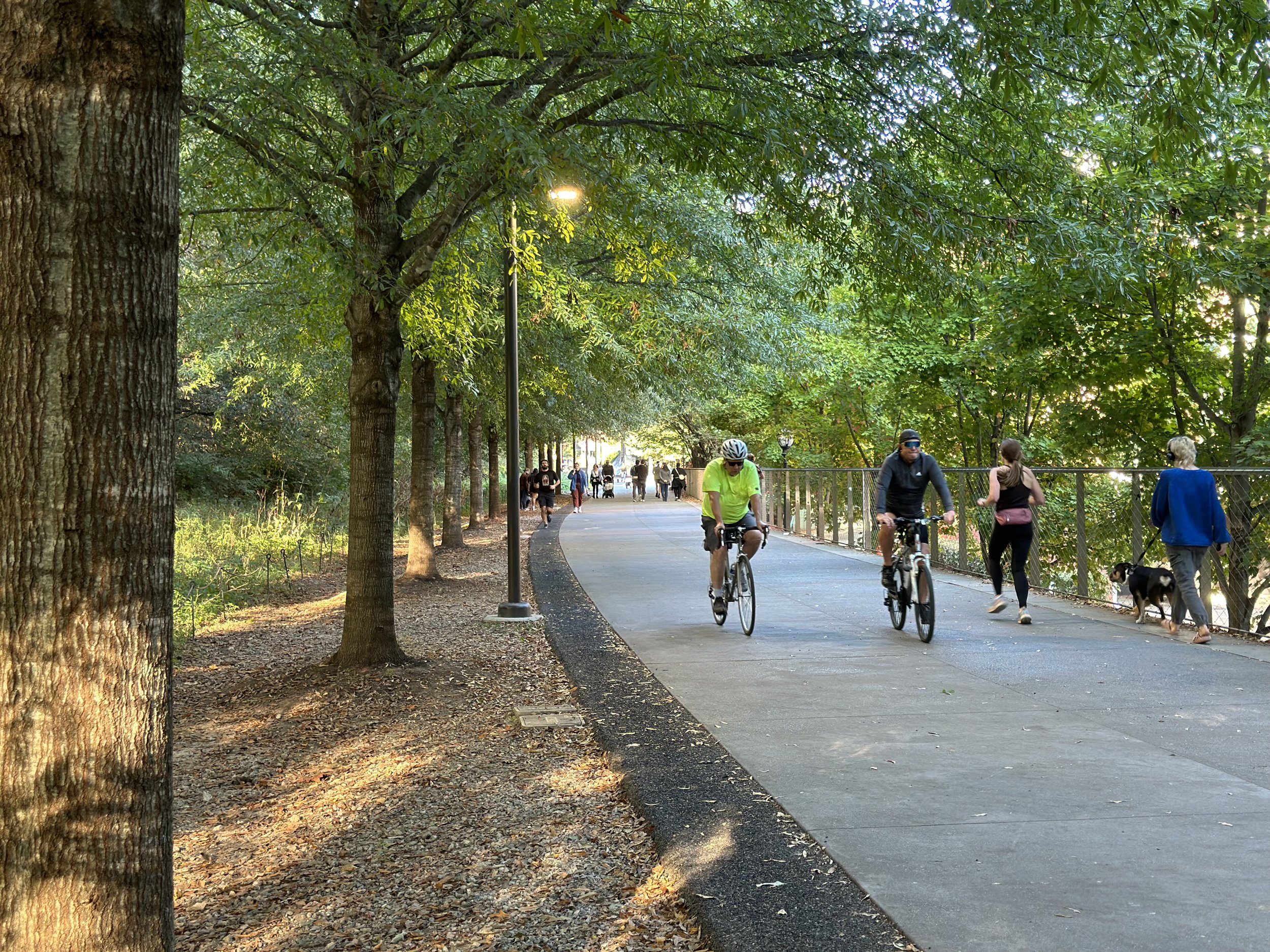
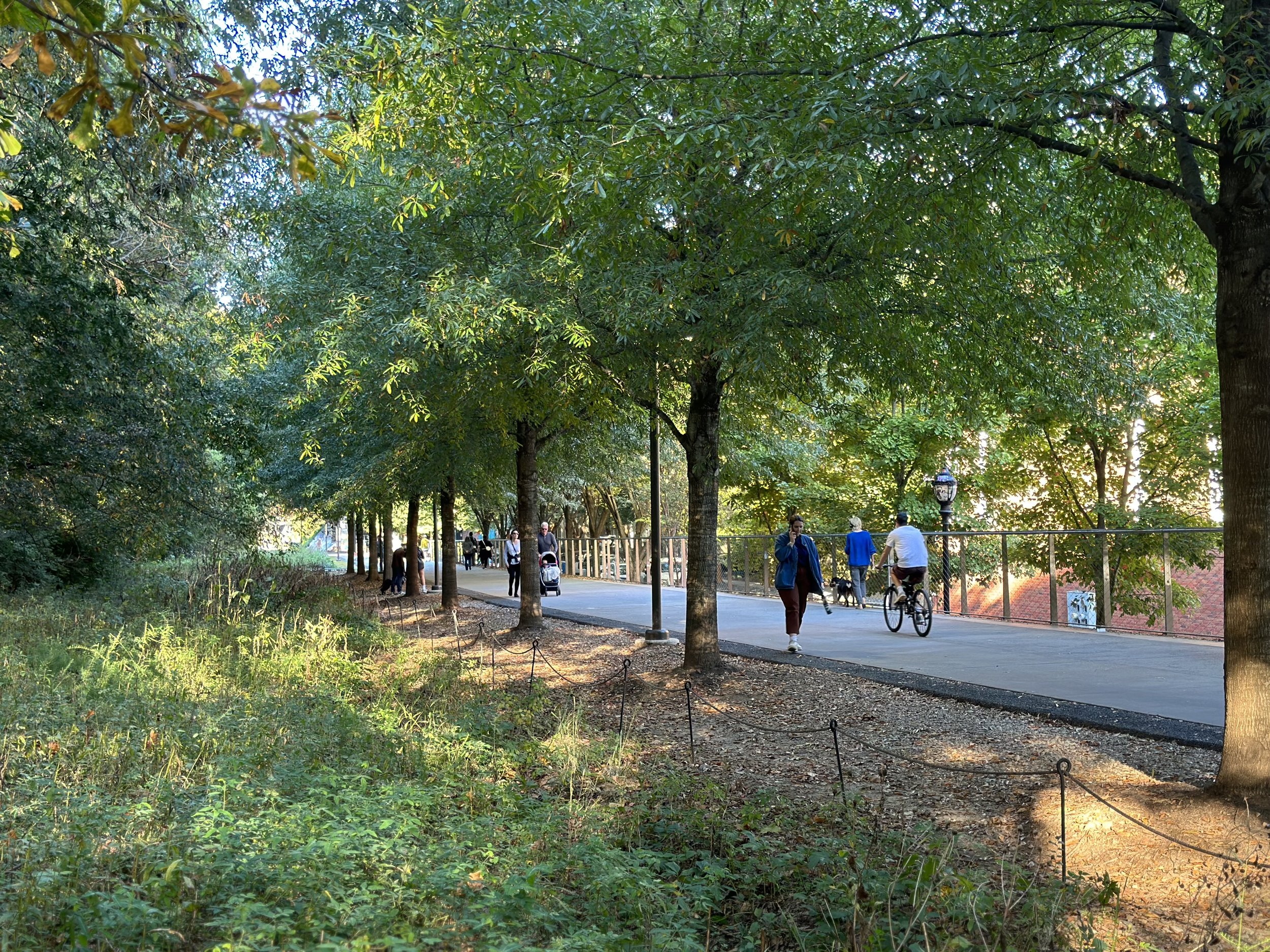
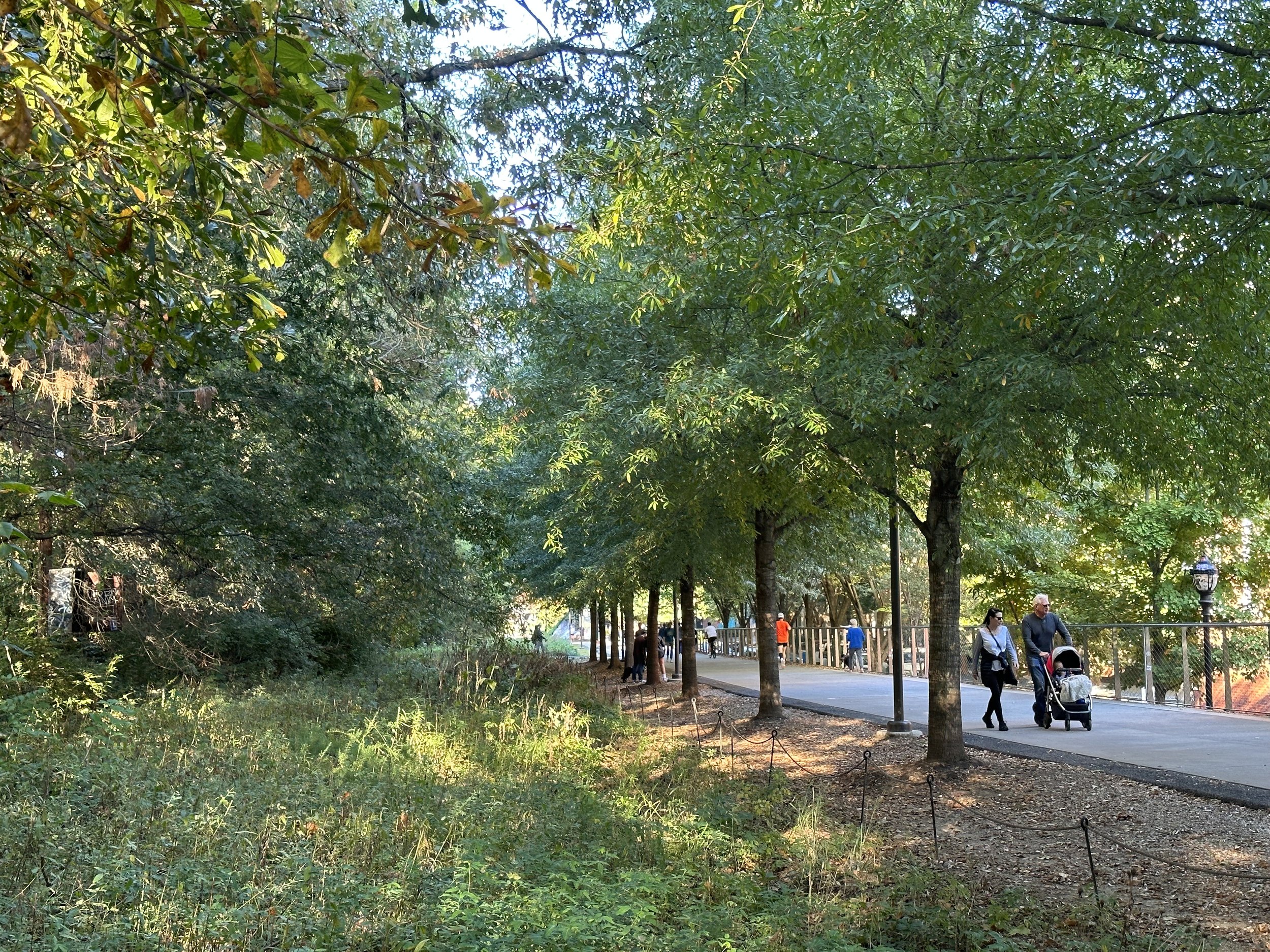


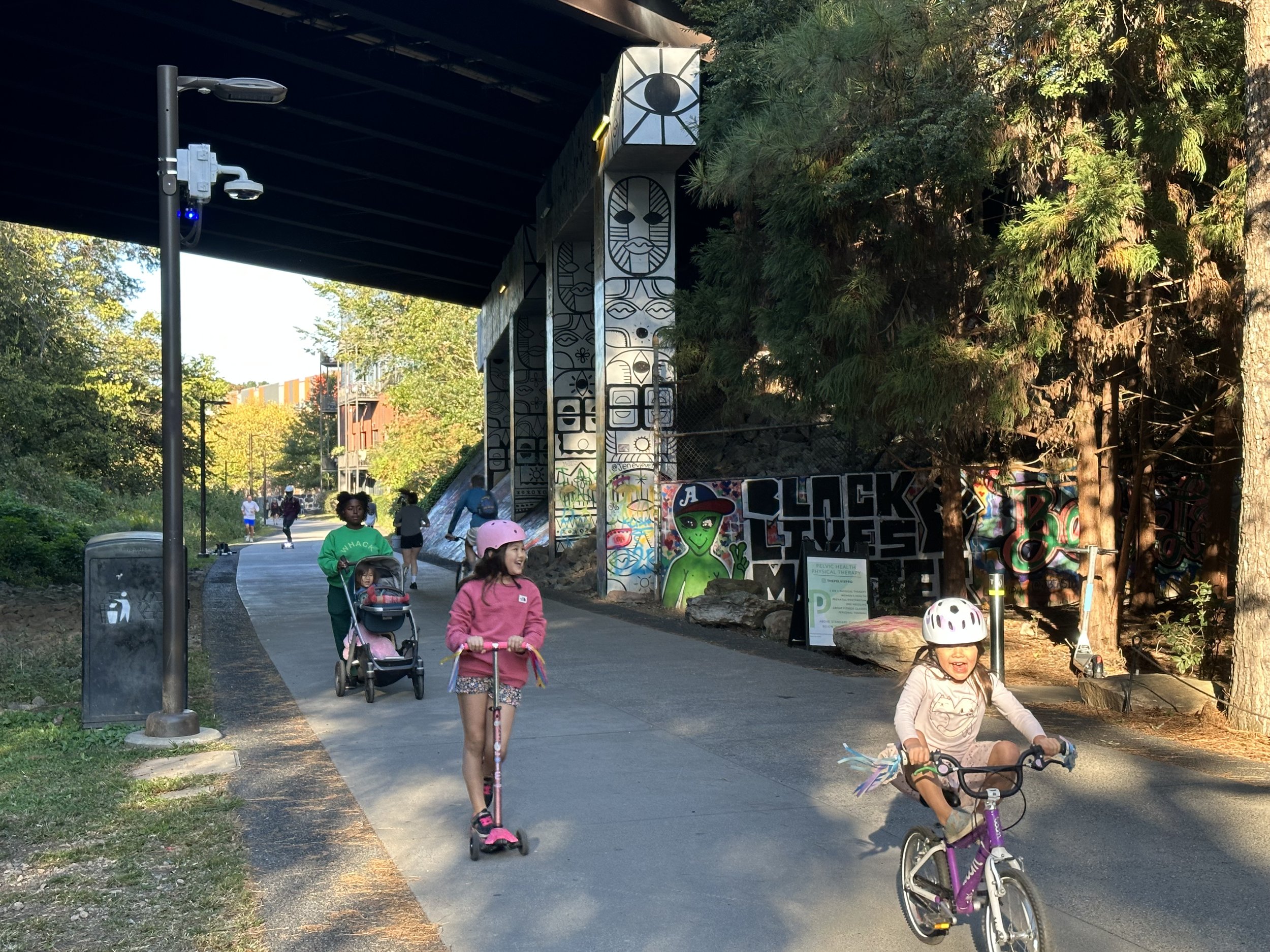
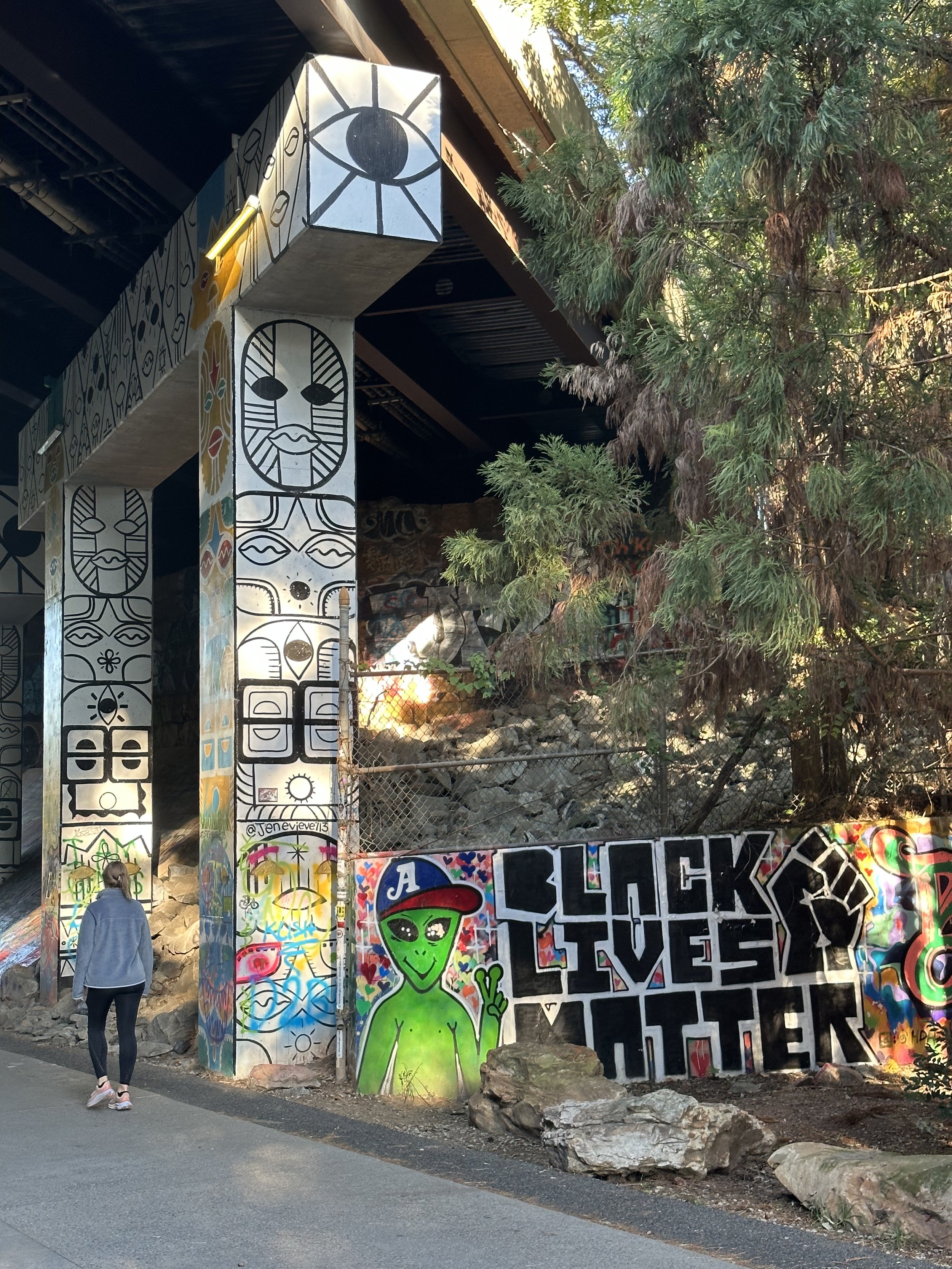


Mayor Andre Dickens has proposed six new transit links to the Beltline trail that would increase access for Atlanta residents who don’t live near the 22-mile circuit.

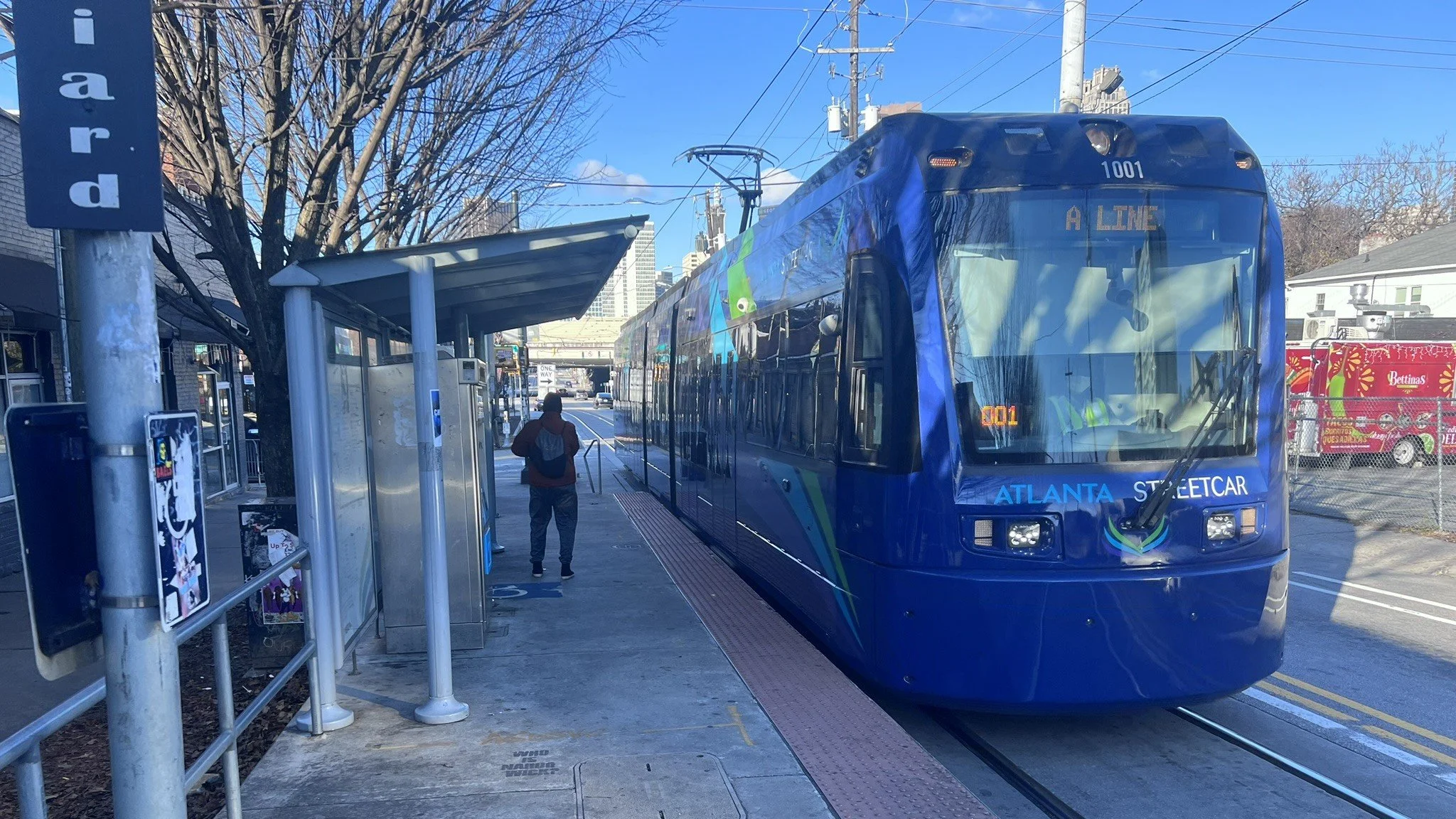
Capital costs for the entire 22-mile Beltline streetcar are estimated to run around $2.5 billion.
How could this money support alternative solutions?

Help us to inform, organize, and mobilize the Atlanta community to influence decision makers and create a world-class transit system.
No single issue has held Atlanta transit back more than the decades-long quest for Beltline Rail — a project that will never be built and that wasn’t designed to solve an actual transportation problem. It’s time for Atlanta City Council to get serious about transit instead of performatively calling for a project that is more fantasy than solution.
The AJC breathlessly reported that BRN supporters recently turned up at a MARTA Board meeting to denounce the board’s decision to cancel the Eastside Beltline streetcar.
How vast was this protest? A whopping 20 speakers, or 0.0037% of the city’s population, who proceeded to yell at MARTA Board members and accuse them of selling out to Big Oil, a group that I’m sure was just in a panic about a two-mile-long streetcar extension.
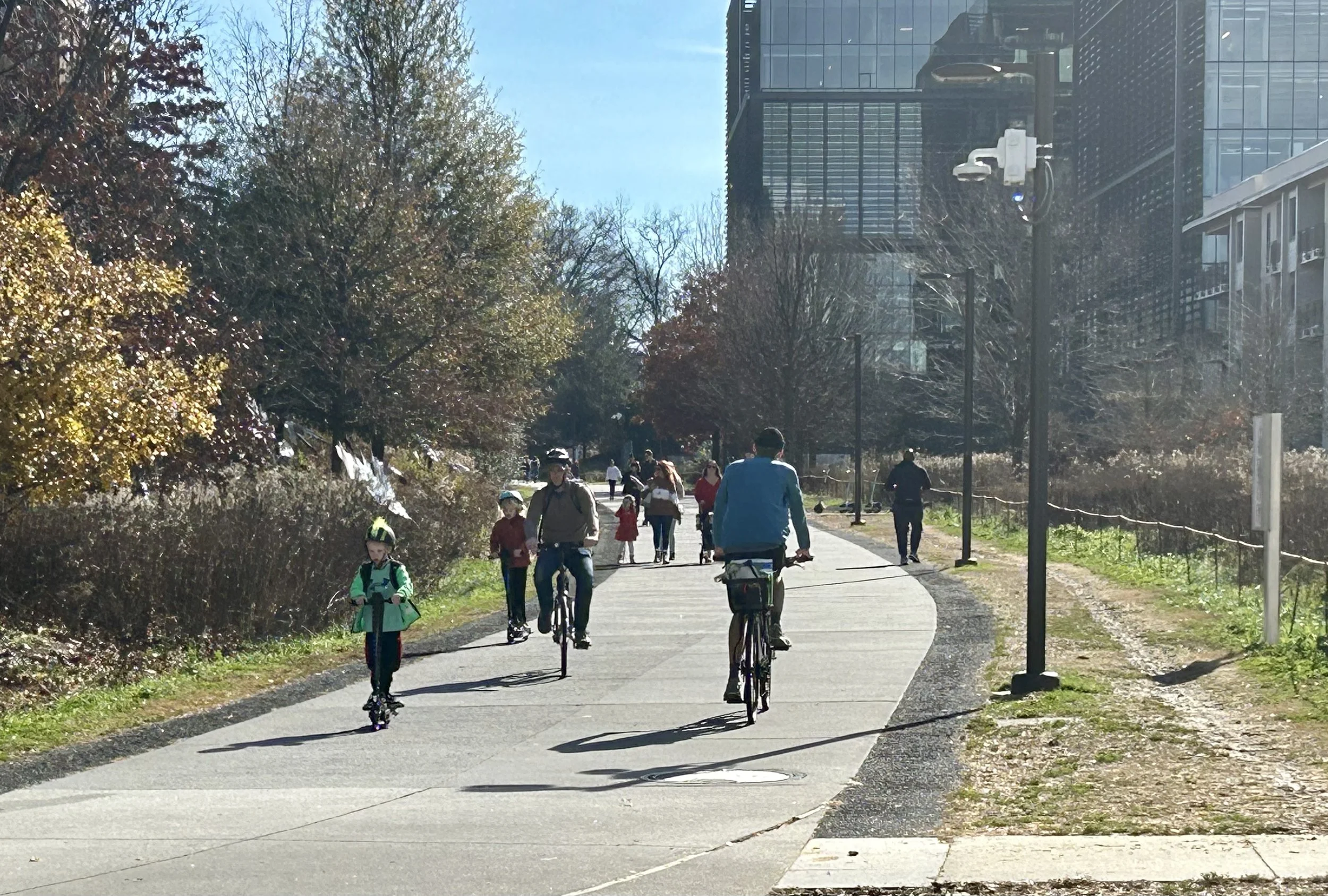
We hope Joe Iacobucci will continue to pivot ABI toward fresh ideas and effective, progressive solutions. If so, he’s certain to see what those who are serious about mobility have noticed alongside the greenway’s spectacular success: The Beltline’s highest use when it comes to transportation is as a short-trip, micromobility corridor that can be leveraged to extend transit to the Beltline, not on it.
Old Fourth Ward resident Jay Miller put the focus on the actual topic of Beltline rail last week in a column for the Atlanta Journal-Constitution.
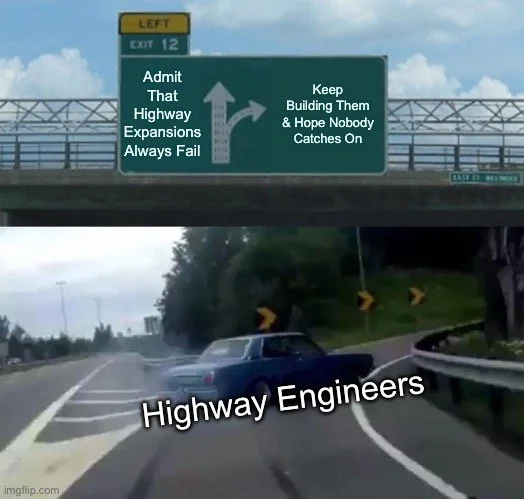
Here's a question for you to consider: if a road is congested, should it be widened? If you answered yes, can you name a major urban highway expansion project that didn't revert within five years to the same average traffic speed as before the expansion? Don’t try too hard, because they don’t exist.
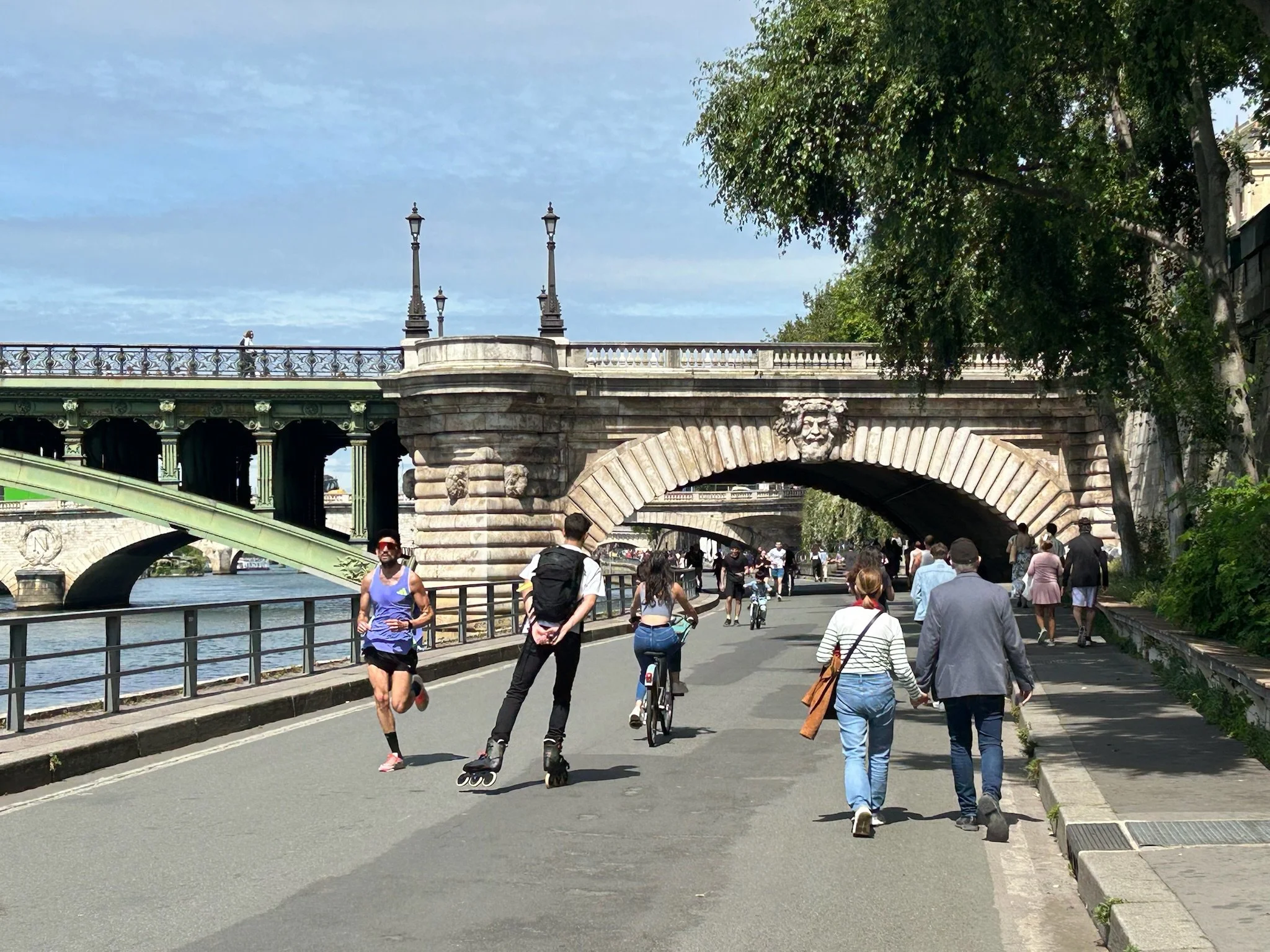
Paris went with a big mix of infrastructure to get its system going fast. Bi-directional bike/scooter lanes, center-running bikeways, concrete-protected lanes, parking-buffered lanes, and off-road paths are scattered throughout the city. City officials are finding that some of these options work better than others, which gives us the opportunity to learn from their trials and forgo their errors.
More evidence bus rapid transit can provide fast, comfortable service at a fraction of the expense of light rail: Miami-Dade just launched a 20-mile BRT line. The price tag? $300 million. Or about one-tenth the projected cost per mile of the Beltline rail loop.
Candidates for City Council President Rohit Malhotra and Marci Collier Overstreet offer extensive answers to BAT’s four questions about Atlanta’s transit and mobility future.
Three candidates for Atlanta City Council District 2 — Alex Bevel Jones, Courtney Smith and Rod Mack — share their views and ideas on the city’s transit and mobility changes.
Four candidates for Atlanta City Council District 7 — Jamie Anne Christy, Rebecca King, Allen Daly and Thomas Worthy — offer their observations and ideas on the transit and mobility challenges that Atlanta faces.
Toni Bell Ingram and Wayne Martin, candidates for an open City Council seat representing southwest Atlanta shared their positions on transit and mobility by participating in Better Atlanta Transit’s questionnaire on the topic.
District 9 City Council Charles Bourgeois answers BAT’s questions about Atlanta’s transit and mobility challenges.
District 4 Councilmember Jason Dozier offers up his thoughts on Atlanta's transit and mobility challenges in responses to BAT's questions.
Matt Rinker has taken on quite a task: He’s trying to unseat Michael Julian Bond — an eight-term, at-large member of Atlanta City Council. Rinker offers up his thoughts on Atlanta’s transit and mobility challenges.
The push to separate wheels and heels on the Atlanta Beltline’s Eastside Trail got a big boost over the weekend from the leaders of four major nonprofits that are deeply vested in the Beltline’s success.
An injury suffered by a young girl last week in a collision with a bicycle highlights a safety challenge on the Atlanta Beltline Eastside Trail. The comments accompanying a NextDoor post by the victim's father make it clear that this was not an isolated incident.
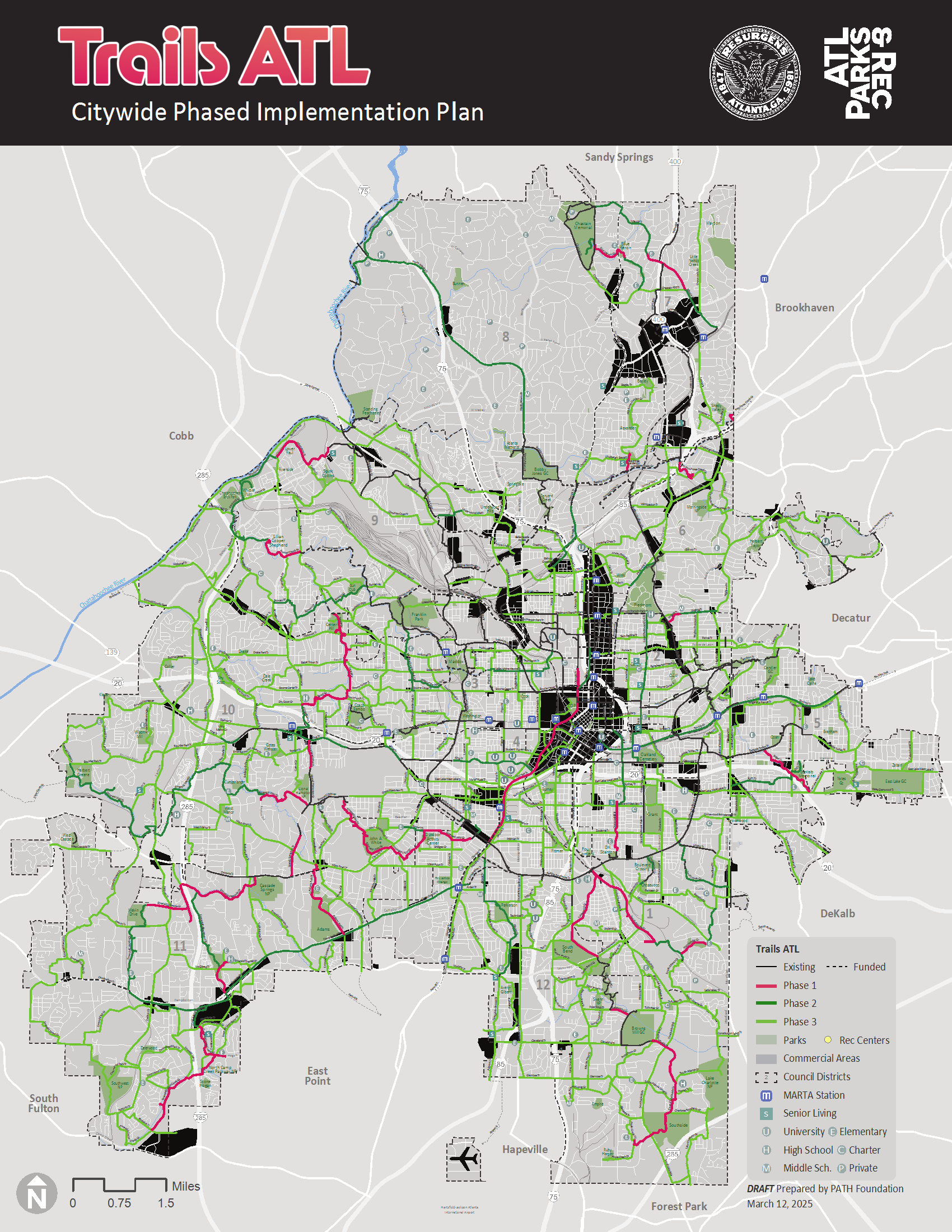
The city’s come up with a long-awaited plan to build some 500 miles of bike and walking trails. Trails ATL is just the latest in a spate of initiatives that could finally address our mobility issues.
Twenty years ago, the Trust for Public Land imagined a future for the Atlanta Beltline. It’s remarkable how much of that vision has become reality.
Mayor Andre Dickens put Atlanta’s transit plans on a more viable track when he and a top aide outlined an integrated approach to mobility before the MARTA Board of Directors. The plan reprioritizes Beltline rail segments, and puts new emphasis on equity, bus rapid transit and micromobility.
A Better Atlanta Transit report calls upon Atlanta leaders to develop an Integrated Mobility Strategy – similar to those adopted in Charlotte, Dallas, Los Angeles and other peer cities.
You’d have to raid a lot of public kitties to build $3 billion worth of Beltline rail. A funding plan proposed by rail boosters would drag much of that money away from bike lanes, affordable housing and other transit projects.
The price tag is likely to be Beltline rail’s undoing. But neither the city nor MARTA profess to have a good idea of what that price tag will be. So we came up with a low-ball estimate. “Low ball” doesn’t always mean “low.”
The Georgia State Law Review has insightful article on Beltline transit and the role that advocacy groups have played in molding Atlanta.
Beltline rail followed an unusual path to get this far down the track. Each time a closer look identified problems or planners proposed putting resources toward more viable projects, rail enthusiasts pressed to keep the dream alive.
Hans Klein, Associate Professor Public Policy, Georgia Tech
Bill Torpy, Atlanta Journal-Constitution
Walter Brown, former Ponce City Market Executive
Atlanta Mayor Andre Dickens to the Atlanta Journal-Constitution
Autonomous vehicles on the Beltline are almost as bad an idea as rail on the Beltline.